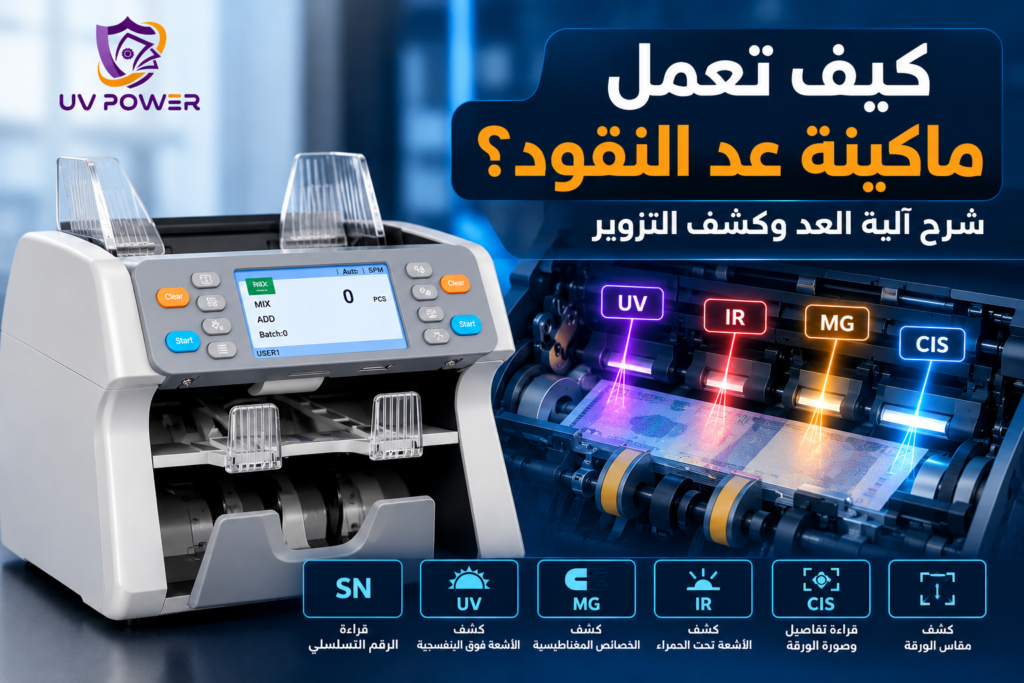

CIS stands for Contact Image Sensor, which is a touch-sensitive image sensor: a row of precise sensors captures a picture of the banknote as it passes through the machine. The machine compares this image with models of the supported categories, identifying each banknote’s category and direction. This triggers the mixed counting function and total calculation, and the image also adds inspection indicators alongside UV, MG, and IR. We explain […]
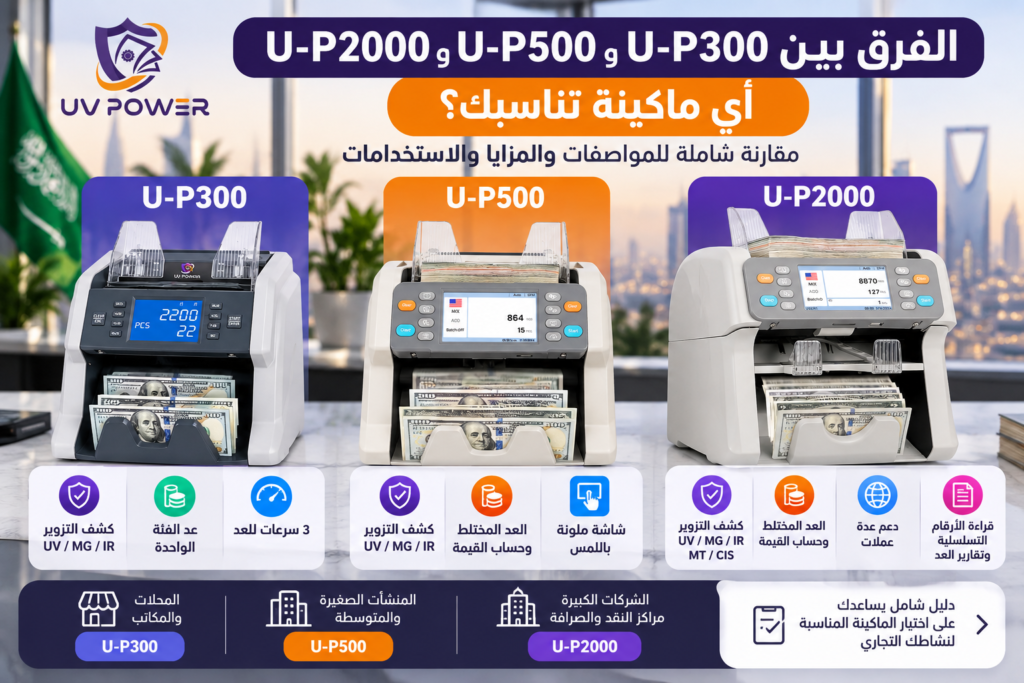
The difference in three lines: The U-P300 counts one denomination at a time and calculates its value with counterfeit detection (UV, MG, and IR), suiting those who sort denominations themselves. The U-P500 counts mixed denominations and calculates the total, with a touchscreen, dual CIS, and support for 20 currencies. The U-P2000 adds a separate reject pocket. […]
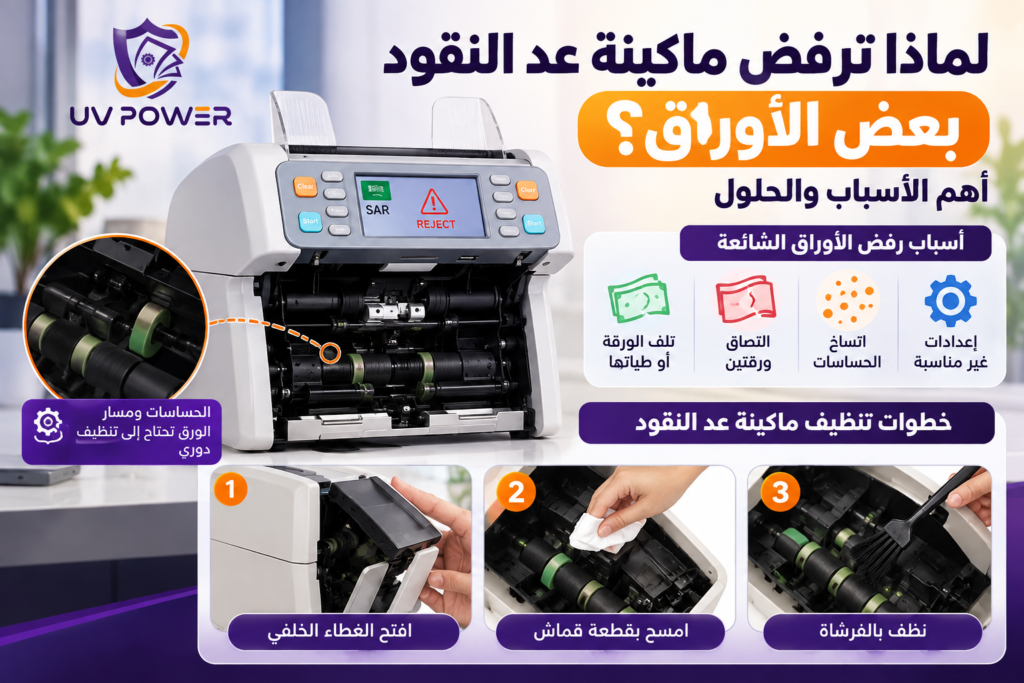
In short: Clean a money counting machine while it is switched off and unplugged. Remove dust from the hopper, the stacker, and the sensor windows with a dry soft brush or compressed air, and wipe the feed rollers with a lint-free cloth. Repeat according to use: the more notes pass through the machine, the more dust they leave behind. […]
Quick answer: A money counting machine usually rejects notes for one of five reasons: a damaged or folded note, two notes stuck together, an unaligned stack, dust on the sensors and feed path, or a currency setting or counting mode that does not match the notes. […]
The best way to count Saudi riyals with a machine comes down to five steps: remove clips and bands, set aside damaged or folded notes, and align the notes in one direction. Choose the right counting mode: single denomination if you have sorted the notes, or mixed denomination counting if the stack is mixed and the machine supports it. […]
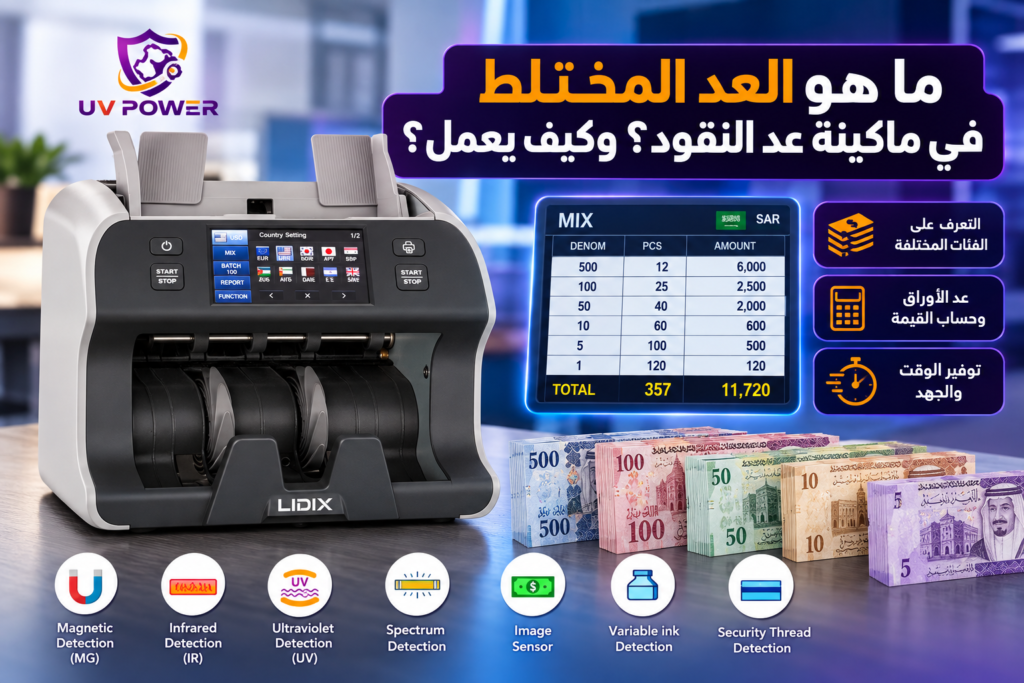
In short: Money counting machines use four main counterfeit detection technologies, each checking a different feature of the note. UV checks how the paper responds to ultraviolet light, MG looks for magnetic ink, IR compares how inks behave under infrared light, and CIS captures an image of the note to recognize its denomination and features. […]
Mixed counting is a function in which the machine counts a bundle containing different categories without pre-sorting them. It recognizes the category of each sheet and displays the number of each category and the total value. Example: A bundle containing 10 sheets of category 500, 20 of category 100, and 15 of category 50, the machine displays 45 sheets with a value of 7,750 riyals, with a breakdown of each category. This helps you to understand […]
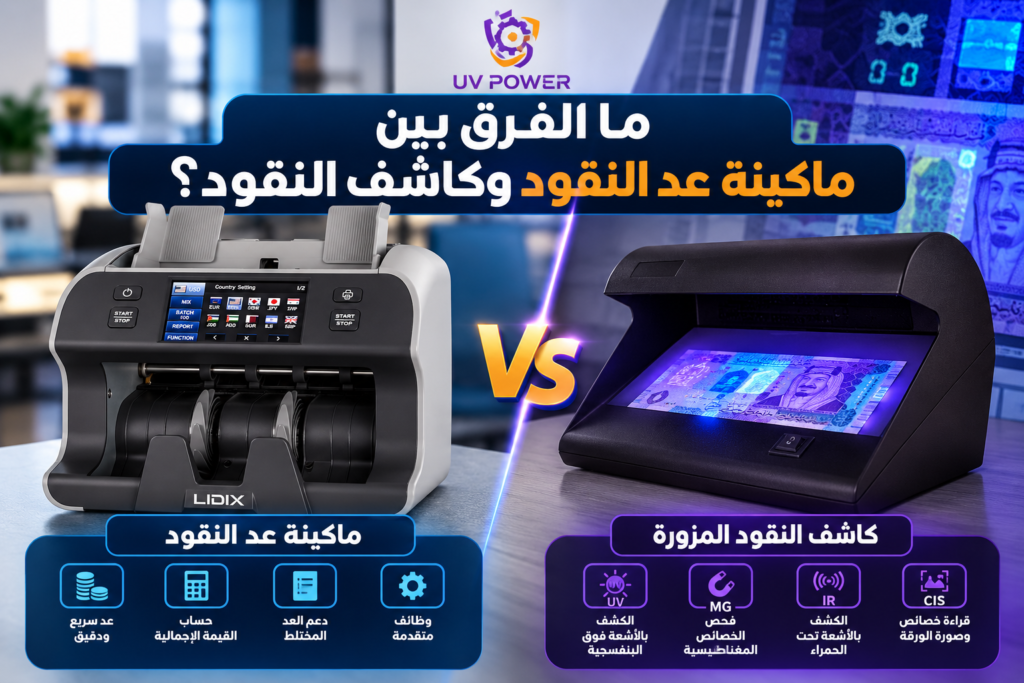
The difference in brief: A money counting machine counts notes quickly, while a counterfeit detector checks a single note without counting it. Examples from the UV Power store: the U-P10 checks a note with ultraviolet and magnetic detection only, the U-P100 counts without any checking, and the U-P200 combines counting and checking with UV, MG, and IR. […]
In short: A money counting machine pulls banknotes from the hopper one at a time, passes each one in front of a counting sensor that registers it, then delivers it to the stacker and shows the count on the display. […]
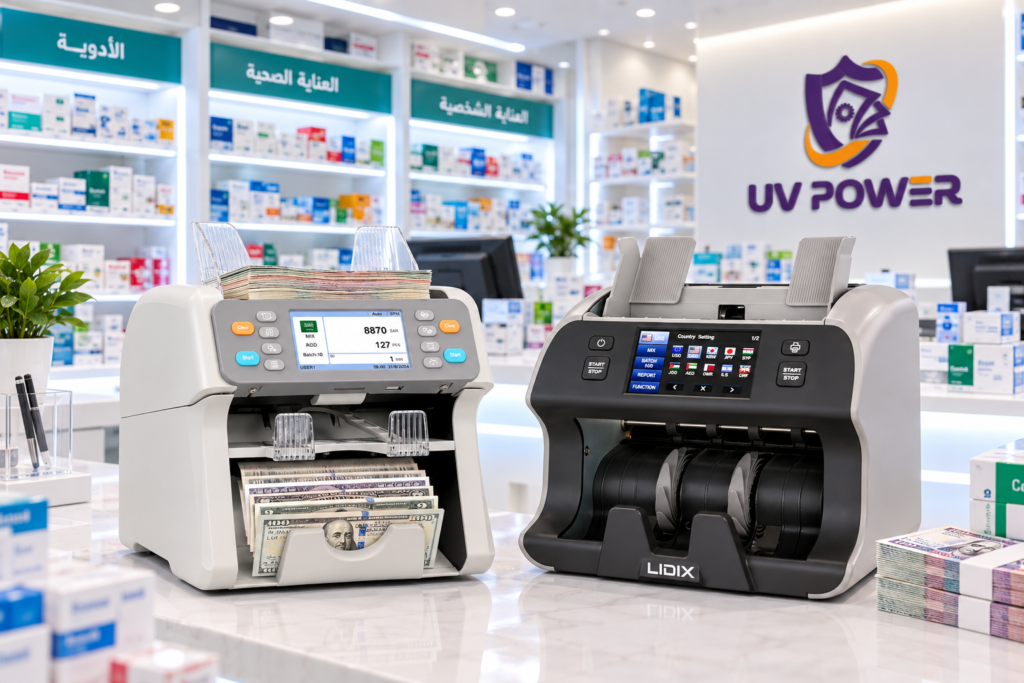
The short recommendation: An independent pharmacy with a single till is well served by a counting machine with counterfeit detection such as the U-P200, which is compact and fits the counter space. A large pharmacy working long shifts with more than one point of sale is better served by the U-P500, to count mixed-denomination takings and close the shift quickly. […]