


money counting machine, Professional money counting machines
Two-Pocket Money Counter or Single Pocket? How the U-P500 and U-P2000 Handle Rejected Notes
Nov
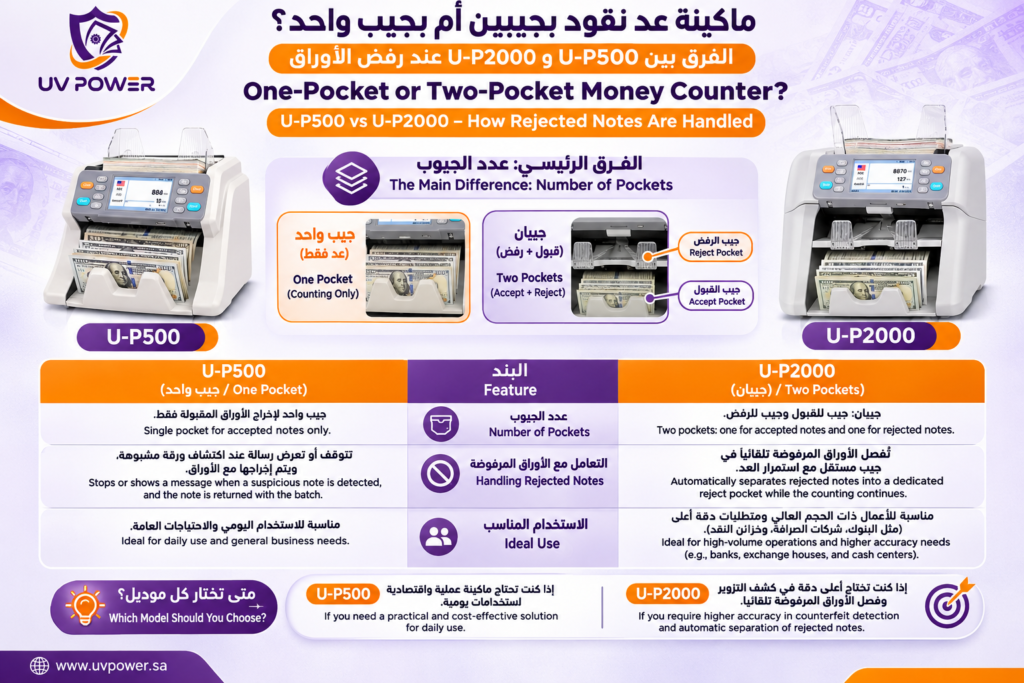
The difference between a single-pocket machine and a two-pocket money counter is not in speed or the number of currencies. It shows at one moment: when the machine rejects a note during a count. A single-pocket machine stops and waits for you; a two-pocket machine sets the note aside and keeps going.
In this guide we compare the two approaches on two models that are almost identical in everything except the pockets: U-P500 with one pocket, and theU-P2000 with two pockets.
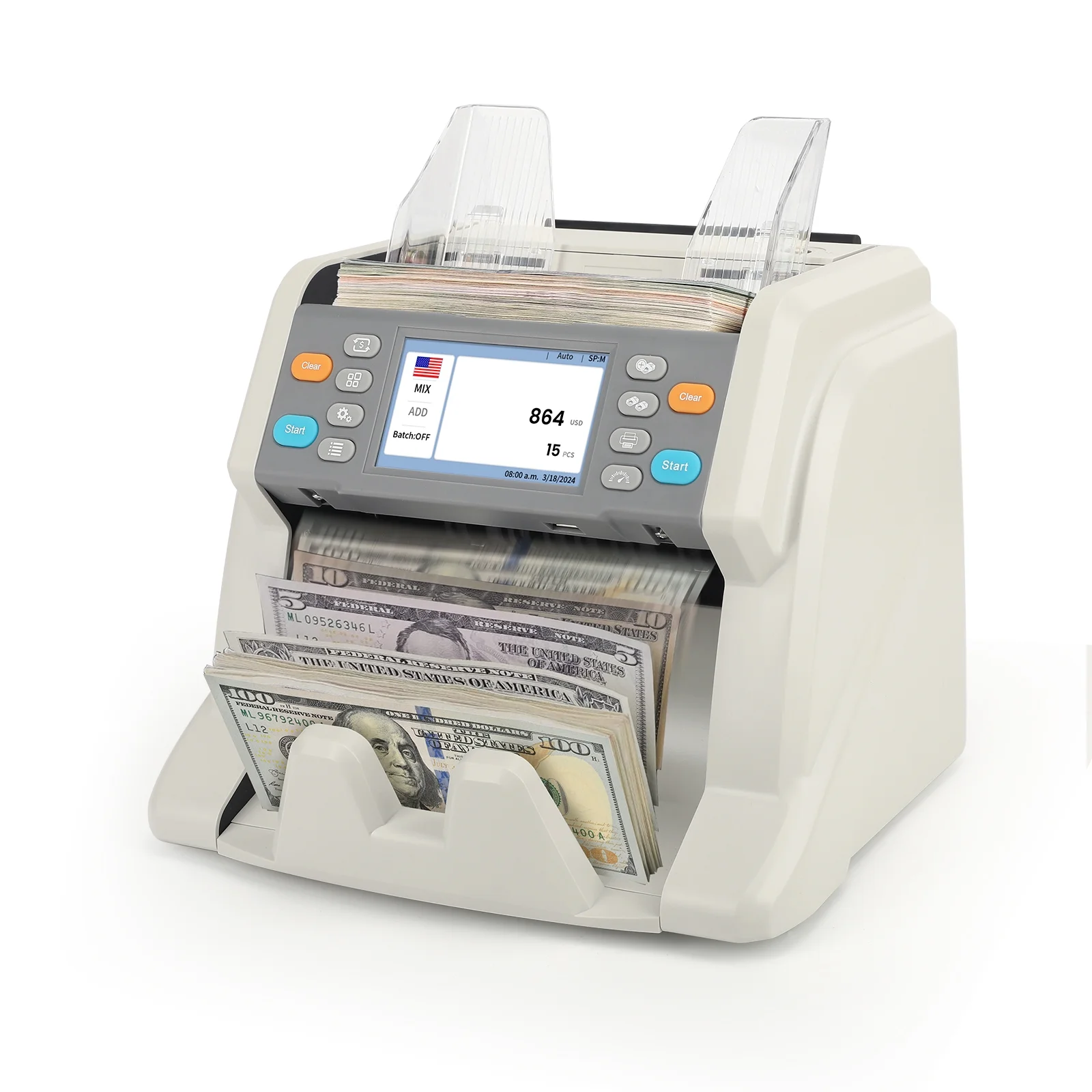
What Happens When a Single-Pocket Machine Rejects a Note?
On the U-P500 and other single-pocket machines, the process goes like this:
- The machine stops at the rejected note.
- The operator removes the note from the stacker.
- The operator presses Start and the machine continues counting.
- The rejected note is not included in the total.
The method is accurate, but it needs an operator next to the machine for the whole count. The more rejected notes in a bundle, the more often it stops.
How Does a Two-Pocket Money Counter Work?
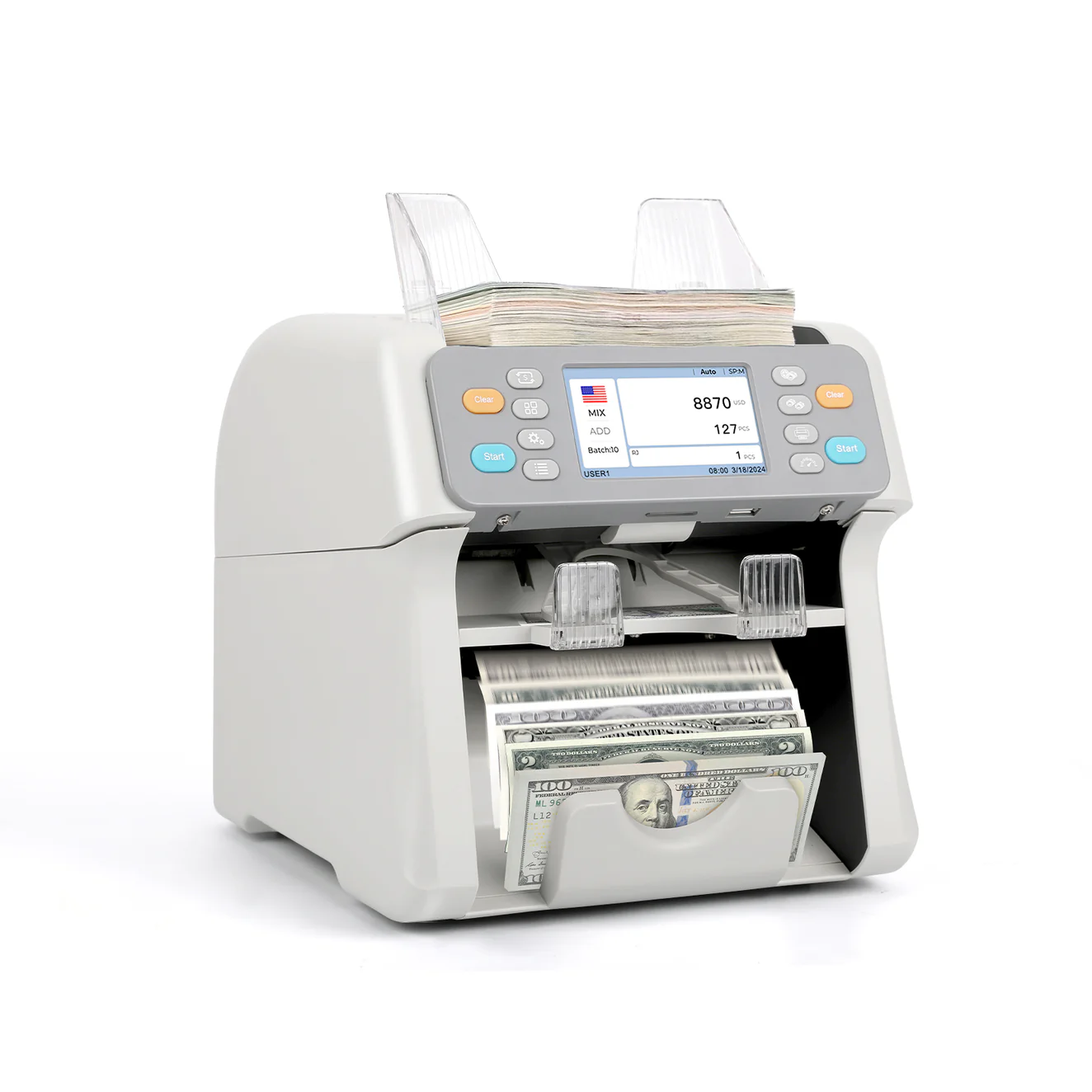
On the U-P2000, counting does not stop. The rejected note is diverted to a separate reject pocket, and the machine counts the rest of the bundle into the stacker.
- The stacker holds only the accepted notes, and only they are included in the total.
- The reject pocket is not included in the total.
- Display shows the number of rejected notes, for example R=4, meaning there are 4 notes in the reject pocket.
Among the notes the U-P2000 rejects: a note whose serial number printed on the right differs from the one printed on the left.
At the end of the count you know the accepted amount and how many notes need a manual check, without standing next to the machine.
U-P500 or U-P2000: What Else Is Different Besides the Pocket?
On most lines, nothing. The table comes from the two product pages:
| Item | U-P500 | U-P2000 |
|---|---|---|
| Pockets | One stacker | Stacker + reject pocket (200 notes) |
| When a note is rejected | Stops until you remove it and press Start | Diverts it to the reject pocket and keeps counting |
| Counting modes | Single, single and mixed "total" | Single, single and mixed "total" |
| Currencies | 20 currencies | 20 currencies |
| Detection | CIS 2, IR, MG, MT, UV | CIS 2, IR, MG, MT, UV |
| Serial number reading | Riyal, dollar and euro | Riyal, dollar and euro |
| Hopper / stacker | 600 / 200 notes | 600 / 200 notes |
| Speed | 800 / 1,000 / 1,200 notes per minute | 800 / 1,000 / 1,200 notes per minute |
| Warranty | 3 years | 3 years |
According to the published specifications, the reject pocket is the main difference between the two models. Current prices are on the product pages for the U-P500 andU-P2000.
When Is a Single Pocket Enough, and When Do You Need a Two-Pocket Money Counter?
| Situation | Right choice |
|---|---|
| Counting one drawer at the end of the day, with cash from your own till | Single pocket is enough |
| Few notes usually rejected, and the operator stays at the machine | Single pocket is enough |
| Counting thousands of notes a day from many customers | Two pockets |
| Cash in mixed condition: old, folded, or from many different sources | Two pockets |
| The operator loads the bundle and gets on with other work | Two pockets |
Businesses that take in a lot of cash from the public, such as Car dealerships andCurrency exchange companies andbanks and cash-in-transit companies, need two pockets the most.
Other Models: Two-Pocket Money Counters from UV Power
Besides the U-P2000, a reject pocket is available on the Magner 2000V andMagner 2000F andGlory GFS-220C andGlory GFS-220F, with a capacity of 100 notes. The U-P100, U-P200, U-P300, L1, U-P500 and Lidix CL-2 all have a single pocket. The full comparison is in the money counter specifications guide.
What Should You Do with Rejected Notes?
A rejection does not always mean the note is counterfeit. It may be folded, stuck to another note, or dirty. Common reasons for rejection are covered in Why does a money counter reject some notes?.
Check rejected notes by hand before accepting or returning them. To learn the security features of riyal notes, see the sixth issue page on the Saudi Central Bank website.
Frequently asked questions
What is the benefit of a two-pocket money counter? Counting does not stop at every rejected note. The note goes to a separate pocket, and the machine counts the rest of the bundle.
Are rejected notes included in the total? No, on either type. On the U-P2000 the display only shows how many there are, for example R=4.
Is the U-P2000 faster than the U-P500? The advertised speed is the same: 800, 1,000 and 1,200 notes per minute. But the U-P2000 finishes the bundle without stopping, so the actual counting time is shorter when there are many rejected notes.
Do I need a two-pocket machine for a small shop? Usually not. If you count one drawer at the end of the day, a single pocket is enough.
Can't decide between the U-P500 and the U-P2000? Message us on WhatsApp with how many notes you count daily and where your cash comes from, and we will recommend the best fit.
Read also:
- U-P300 vs. U-P500 vs. U-P2000
- Money counter specifications: how to read every line
- Banknote serial number reading on money counters
